
Model guide · Fishing boats
Used Grady-White buying guide: what to check on a 20 to 26 footer
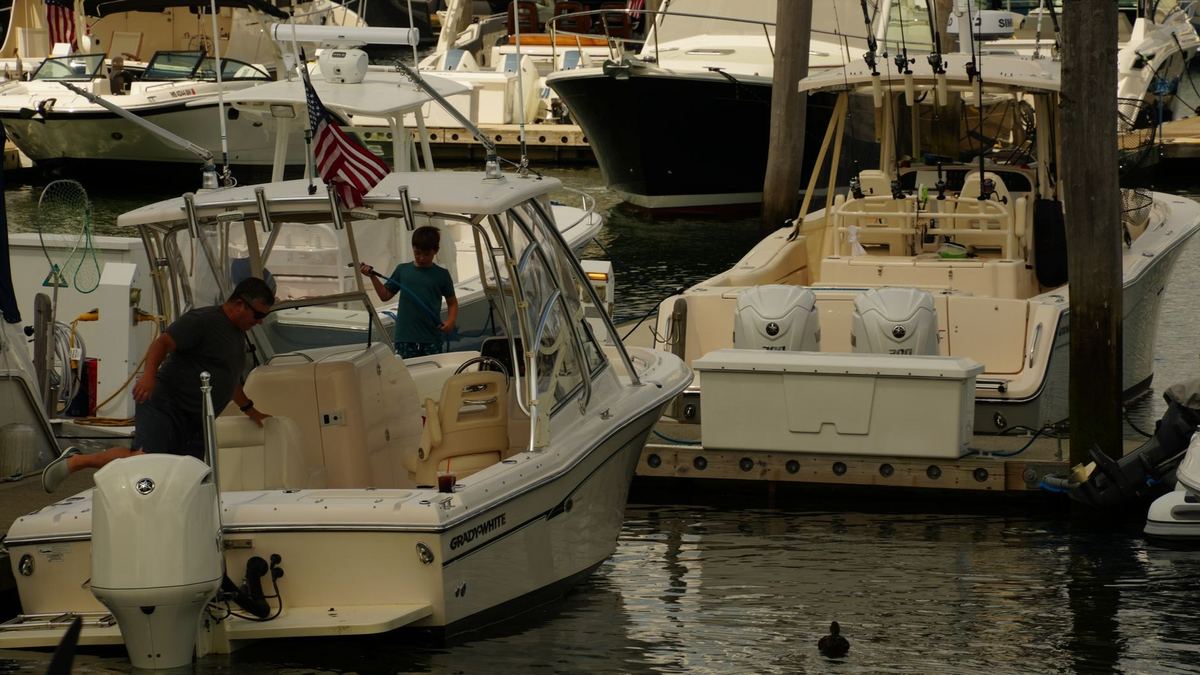
Grady-White has a loyal following for well-finished boats with a comfortable ride and good resale. BoatUS's 2026 comparison of J.D. Power values found that a 2016 Grady-White Freedom 255, with a base price of about $110,010, had an average retail value of about $83,460 ten years later, a drop of about 24 percent.1
You pay a premium for a Grady, and you get much of it back. The best buys are newer boats with low-hour outboards and records. The worst are the oldest, cheapest ones with original engines and wet floors, which are cheap for a reason.
Grady-White at a glance
| Length | About 20 to 26 ft |
| Types | Center console, walkaround, dual console |
| Power | Single or twin outboards |
| Strengths | Ride and resale |
Is a Grady-White right for you?
A good fit if you want a seaworthy family fishing boat with a strong reputation, you'll use her on bays and nearshore water, and you value resale.
Think twice if you're shopping strictly on price, the boat is one of the oldest in the range with an unknown transom history, or you really want a pontoon-style family platform.
What to check
The outboards
- Hours and service records for each engine
- Compression tests: cylinders within about 10 percent of each other2
- Gearcase oil: milky oil means water getting past the seals3
- On twins, run each engine alone on the sea trial as well as together
See our used outboard buying guide.
Transom, stringers and floors
On older boats, especially the oldest in the range, check for wet or rotten structure. Push hard on the deck around the helm and in the cockpit, look for cracks where the floor meets the hull, and with the engines tilted down, push and pull firmly on the lower units while watching the transom. See fiberglass boat problems.
The fuel tank
The fuel tank on many center consoles sits under the deck, and aluminum tanks can corrode from the outside where water sits against them. Smell the bilge and the fuel fill area, look at whatever you can see of the tank, and ask about its age and any replacement records. A tank replacement on a boat like this means opening the deck.
Cabin and hatch leaks
On walkarounds and dual consoles, look for water stains and mildew in the cabin and around hatches and windshields.
Electronics
Chartplotters, radar and fish finders age quickly and affect value more than owners expect. Note their age and whether they work, but don't pay much extra for old electronics.
Questions to ask the seller
- How many hours on each outboard? Who services them, and can I see the records?
- Has the transom or any of the deck been repaired or re-cored?
- How old is the fuel tank? Has it ever been replaced?
- Fresh or salt water? Kept in the water, on a lift or on a trailer?
- Can I run compression tests and pull the gearcase oil?
Common questions
Do Grady-Whites hold their value?
Generally well. In BoatUS's comparison, a 2016 Freedom 255 lost about 24 percent of its base price over ten years.1 Condition and engine hours still drive the price of any individual boat.
What's the biggest risk on an older Grady-White?
Wet structure (transom, stringers and floors) and an aging under-deck fuel tank. Both are expensive and both are worth checking before you offer.
Single or twin outboards?
Twins give redundancy offshore but double the maintenance and fuel. For bays and nearshore fishing, a well-maintained single is often enough.
Sources
HullVet guides are written by the HullVet team with AI help, from the research behind The Honest Boat Buyer's Kit, and facts are linked to their sources. They're general education, not a marine survey or legal, tax or financial advice. Rules and prices vary by state and change over time, so check what matters for your boat.